Monday, May 9, 2011

The First of May - Permaculture Day

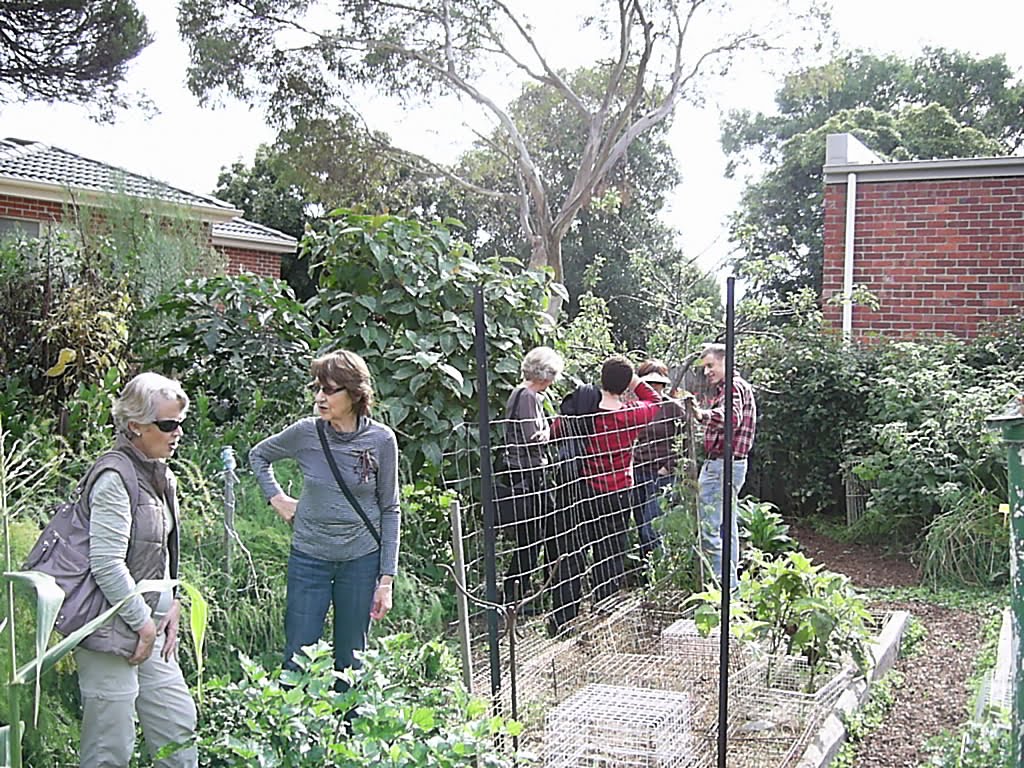
Petra opened her Ashburton garden for the day, with support of the South Eastern Suburbs Group (http://www.sesuburbspermaculture.org.au/). She's got a great range of 50 fruit trees etc. Very intenstive. I helped do tours for a few of the 180 visitors.

Been busy grubbing up a tree root - lots and lots of digging around and chain sawing


And work on the Ashwood college pizza oven progresses...

That's Kevin and Seila, who've done most of the work, with help from many.


A new (old) wood heater, only uses timber left on suburban nature strips by tree loppers.


Picking olives with David Arnold in Violet Town.

Saturday, April 9, 2011

Easter - pictures of autumn


Some things go well, some don't, but unless you experiment, I guess you'll never learn. These seedlings have grown too slowly and then got eaten by slugs. I was growing them to sell at the Murrambeena market.

Other things have done better. The cherry tomatoes just keep going and going, long after the bigger ones have finished. What happened here? This throw back is a half tomato, half capsicum. Tastes okay, but I think I prefer one or the other.
Pumkin harvest is done - I got about eight or nine like this.
Pizza oven at Ashwood College Permaculture Garden is coming on well.
Chooks (the brown one in front especially) wake us at 6.30 sunrise. They wait at the gate to come bursting out. A better use for seaweed than the garden...

Monday, February 21, 2011

Februrary Harvest, the pressure cooker and SLF

With a family of four, it can feel like all the effort growing fruit and vegies doesn't go very far to supplement our diet, especially as we're omnivors. I realised the other day though, that we are getting a good yield at the moment. In no particular order:
  • Silverbeat
  • capsicum
  • chives
  • warrigal greens
  • tomatoes(*4 varieties)
  • potatoes
  • basil
  • apples
  • nectarines
  • eggs
  • plums
  • pepinos
  • corn
  • herbs(*5+)
  • celery
  • chillies
  • zuccini
  • rhubarb
  • Lettuce

Sure, some are more abundant an others, but I'm pretty pleased with this list. All from 30 to 40m2 at a guess. This pic shows but a few - can you ID them all?

Here's some of this year's tomatoes. Mostly heritage varieties. The dark red ones are Black Crim. As with the yellow ones, they're very meaty compared to those commercially grown.This pumkin was a bute. I used just half to make this full pressure cooker load of pumpkin soup, plus a tray load baked in the oven. (Think I'll get sick of pumpkin in the next few weeks).
I recently found the pressure cooker discarded on the nature strip. I had been thinking of getting one, so I couldn't believe my luck. The soup took just 15 minutes cooking time, so it's a great energy saver. Here's the recipe. It does a great goulash in 45 minutes instead of four hours also.

On another topic, yes, it was a great weekend (18/2/11) at the Sustainable Living Festival. The theme that came through for me though, is how much time we've lost talking about but not dealing with Climate Chaos. Now we need to get to zero emissions in 10 years! Beyond Zero Emissions suggests how it can be done. Not sure I have much hope though. This podcast by Clive Hamilton shows how the debate is not about the science. Those on the right of politics have taken a sceptic 'position' against what they percieve as the environmental/ left wing gang.

John McKenzie at the Permaculture Melbourne stall, SLF, 19/2/11. Thanks for organising it John!

The Bok Flock: Sustainable Living Festival

The Bok Flock: Sustainable Living Festival: "Hello! Today we took a wander through the Sustainable Living Festival weekend at Federation Square in Melbourne. Even the w..."

Sunday, February 6, 2011

Permaculture Designs

Permaculture is a design system to live sustainably. That is, setting up your house and garden to create more energy than you use, and to live within nature's limit. I've done a handful of property designs for people since completing my Permaculture Design Course, as a hobby.
The design process starts with taking a brief from you. It needs to fit your vision, functional needs, aesthetics and budget. Next is an analysis of the property. Where are the special niches - where does the sun, shade, wind and rain coming from? How can you minimise your energy running the system. Once a plan is costed we can discuss and stage implementation.
If you'd be interested to have a chat about your place, send me a comment via this page. No cost to you except materials if you're closeby. This is my hobby and I want the experience. If you attend a couple of other Permablitzes, we can organise a working-bee to construct the design in a day.

Here's some designs I've done recently.


Thursday, January 20, 2011

Chooks (Bantams) available to a good home

I offered to look after these three girls when a member of my local permaculture group moved to a flat a couple of months ago. They don't lay many eggs and I'd like to give them to a good home. Not sure how old they are, but they're very cute, healthy and people friendly. Being bantams, they're a bit smaller, and they take very little effort to look after. They eat less and poo less. Just lock them up at night. Available to collect in Ormond, as of 20/1/11. Call me on 0401 991 866.


The garden's going great guns after the rain and sun.


Monday, January 3, 2011

The Oat Growing Experiment

Back in chilly August, I dug over half the back lawn and planted oats and peas.
(See here)
The peas didn't do to well, but the oats have done okay, among many weeds and subsequently planted potatoes.

Today, 3/1/2011, we had a go at harvesting the oats.

We started by cutting the heads of the oats. I spread them out on a sheet, stomped on them and scrunched them around. The next step should have been to sprinkle them into a bowl, allowing the wind to blow off the chaff. Trouble is, these oats have husks. I should have bought a husk-less variety if I wanted to do this by hand.
This photo shows what has to be removed to get to the rolled oat at the far right. The final husk (steps three and four before the end) is too hard to remove on-mass by hand.
In the very last step, I've rolled the oat with a roller, to make it look like what you get in muesli.

So I can easily grow my own cereal, but processing it ready for breakfast is a bit harder. Too hard by hand. But not all is lost. Oats are a great source of protein, fats and other nutrients. They'll make great fodder for the chooks, off-setting feed costs. I can just put the chooks in the chook tractor on top of the oats. The are very efficient at de-husking. More importantly, we've learnt what it takes to get our porridge.